



Knowledge transfer during staff changes: keeping knowledge in the company
Knowledge transfer during staff changes means passing on task knowledge and experience in a way that enables the successor to work with it. This includes clear documents, practising together and a verified handover.
Nexoria for Team knowledge
Team knowledge: what it brings to your team.
WHAT THIS LOOKS LIKE DAY TO DAY
Record more than a task list.
Document recurring activities, important decisions and open questions. Link the description to the documents a stand-in needs for the next step.
- Activities
- Decisions
- Open questions
- Sources
Assign responsibility for every body of knowledge.
Name the people responsible for documents and access permissions. When staff change, check which content needs to be handed over and who will keep the content up to date in future.
- Content
- Responsible people
- Access permissions
Test the handover on a real use case.
Have the person taking over complete a typical task using the documentation. Add missing context and resolve questions before the final changeover.
- Test the task
- Identify gaps
- Add context
This is Nexoria
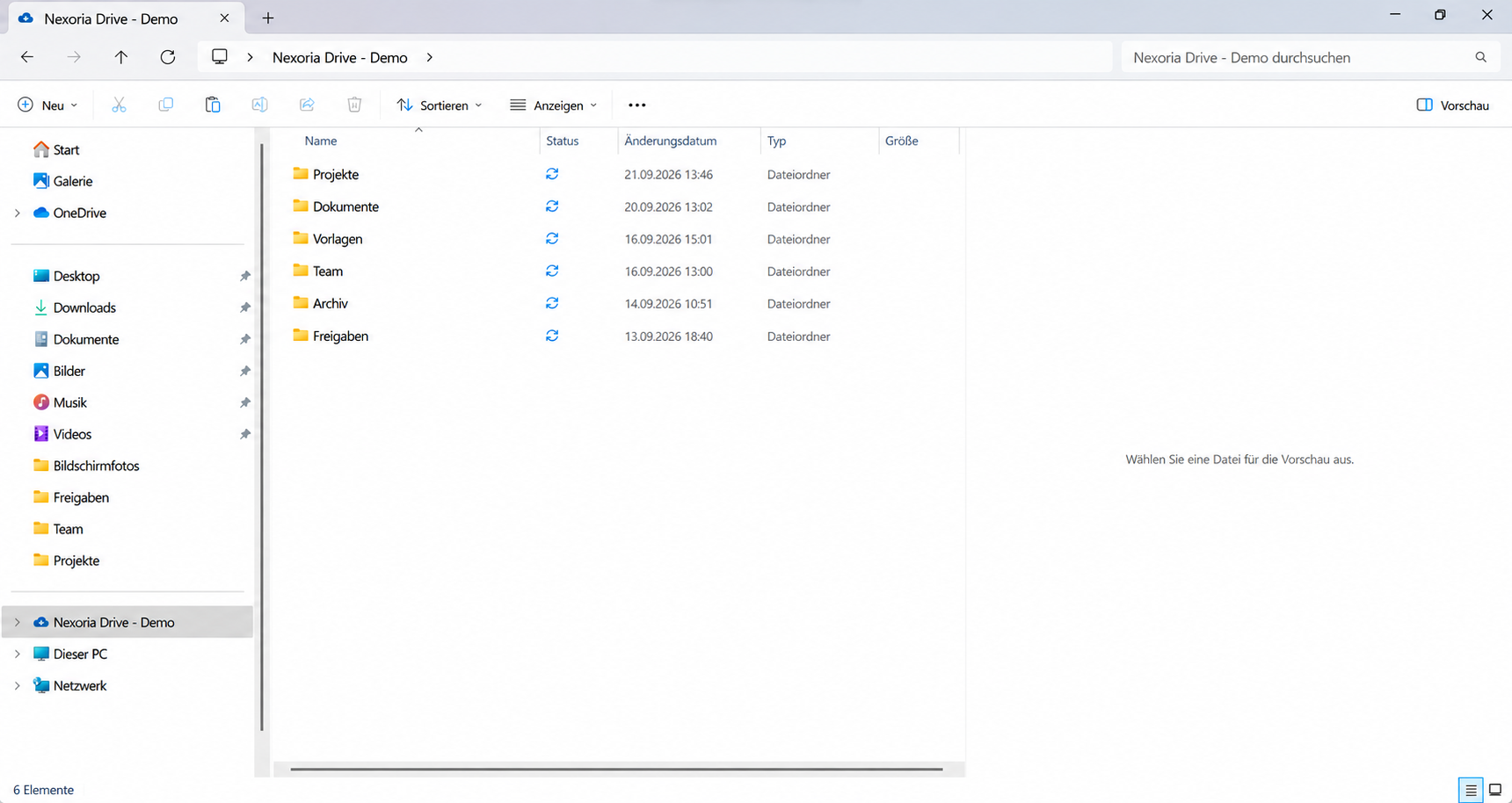
Your files. In the familiar File Explorer.
Nexoria Drive in Windows File Explorer: folders and sync status in one view.
Knowledge transfer during staff changes means passing on task knowledge and experience in a way that enables the successor to work with it. This includes clear documents, practising together and a verified handover.
Knowledge retention starts before the last working day: record critical tasks, decisions, exceptions and contacts. The departing person reviews the documentation, and a person taking over tests it on concrete tasks. Nex then helps find and prepare the documented knowledge. The handover conversation and subject-matter approval remain with your team.
Transfer tacit and explicit knowledge
| Type of knowledge | How to recognise it | Suggestion for the handover |
|---|---|---|
| Explicit knowledge | It can be expressed and recorded, for example in a work instruction. | Check valid documents, mark outdated versions and test how they are applied. |
| Tacit knowledge | It develops through experience and practice and is often difficult to describe. | Work through a concrete case together; have decisions explained and then practise independently. |
The distinction between the terms follows the INQA-Check Wissen und Kompetenz. The handover steps are suggestions from Nexoria. Documentation and practising together complement each other: documents record processes, and practical exercises convey the experiential context.
1. Narrow down critical knowledge
Start with tasks that would stall without the person concerned. Prioritise the documents needed for these tasks. For example, choose a regularly occurring service case, a recurring report and an important exception in the project process.
Distinguish between three states: knowledge is documented and current, knowledge is documented but unclear or outdated, or knowledge has so far existed only as experience. Each state requires a different next step: approve, correct or first capture.
2. Pass on experiential knowledge using a concrete case
Have the task explained using an approved example. Ask about decisions and exceptions, not just a general job description. Note how an experienced person recognises that the standard process does not fit.
- What triggers the task, and what result is expected?
- Which documents and information are needed?
- Which steps are necessary, and who decides on exceptions?
- What are the common mistakes, and how can you recognise them?
- Where is the valid requirement recorded, and who will keep it up to date in future?
Write the answers in a handover document. Enter the version, date and the person responsible for the content. Use written notes containing the information approved for the task.
3. Create a handover register
| Task | Valid source | Open point | Future responsibility | Acceptance test |
|---|---|---|---|---|
| Handle a complaint | Approved work instruction with version date | Add escalation for special cases | Enter the responsible role | Handle a sample complaint using the instructions |
| Create a project status report | Report template and description of the input variables | One key figure has not yet been explained | Enter the responsible role | Create a test report from approved sample data |
| Clarify a recurring exception | Supplemented decision log | Confirm responsibility | Enter the responsible role | Recognise the exception and formulate the correct follow-up question |
The rows are freely worded examples. A blank handover template (Markdown file) is ready for you to fill in.
4. Make knowledge findable for the right person
Store the approved documents in a jointly managed area. Use clear titles and mark outdated versions. Assign a valid primary source to each task. Consistent versions and clearly assigned sources make subject-matter sign-off easier.
The documented content can be made accessible via Drive, Workspaces and the Document search in Nexoria. Workspaces bring together the content selected for the handover in the right working context. This makes documented experiential knowledge findable through document search and Nex.
5. Test the handover without prompting
The person taking over first works through an approved sample case using the documents. Note every question they ask. Add to the documentation wherever a step is missing or several versions contradict each other. The same case is then checked again.
If an AI assistant is used, also ask specific questions, for example: “Which documents does our approved work instruction require for this test case? Cite the source passage.” Open the source and check whether it actually supports the statement. Also test an undocumented exception. This shows you whether the answer is based on a source and makes gaps in the documentation visible.
For this check, the AI pilot guide can be used. The quality check described there complements the subject-matter handover.
6. Finalise responsibility and access
Before closing, specify who approves new versions and which open points will be resolved by when. Check whether the successor can access the required sources. Agree with the relevant responsible people on revoking access that is no longer needed and on assigning shared documents.
A handover is traceable when tasks, sources, responsibilities, open points and test results are documented. Select the required documents according to the procedures approved in your organisation.
Frequently asked questions about knowledge transfer
How does AI help retain the knowledge of departing employees?
AI makes documented and approved content accessible. That is why you should first record reasons for decisions, lessons from experience and exceptions in writing, through conversation or joint work. Once they are stored in Nexoria, you can find them via document search and Nex.
How can we tell that the handover is working?
Have the newly responsible person work through typical tasks using the approved sources. Document questions, missing steps and incorrect assignments. What counts is a traceable workflow, not just the number of stored documents.
Do we need new software for this?
What matters first is a well-maintained filing system and clear responsibilities. If content is hard to find, the Guide to choosing knowledge management software can help you decide. How Nexoria makes existing documents usable is explained in the company knowledge solution.
Subject-matter background
The KOFA describes knowledge transfer with AI for companies. The ifaa explains methods for knowledge retention and AI use cases. The process presented here and the templates are practical suggestions from Nexoria.
Use of Nexoria is subject to the current terms. The right starting point is something you can discuss with us.
As of 24 September 2026.